
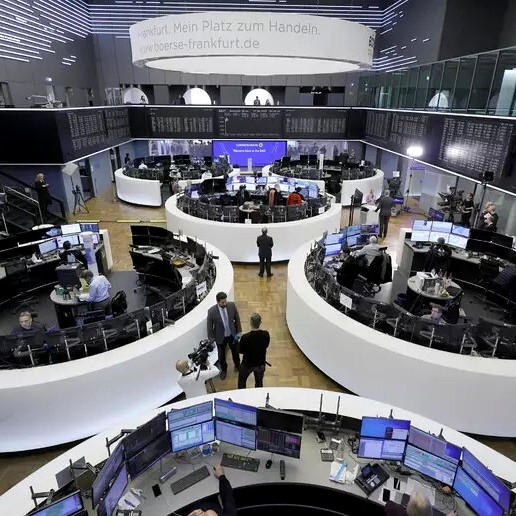
Overview of European Market Performance
In a day marked by cautious optimism, European stock markets exhibited a mixed performance following the opening of Wall Street. As investors reacted to various economic signals, the markets showed divergence in their movements, reflecting both local and international sentiments.
Market Movements
On October 10, 2025, Paris saw a slight dip of 0.05%, trading just below parity. The spread over the German Bund was recorded at 81.6 basis points, while the yield on French OATs stood at 3.48%, slightly higher than Italy’s BTP yield of 3.46%. London’s market remained flat, and Frankfurt edged up by 0.04%. However, Milan experienced a more pronounced decline, slipping by 0.32%.
Sector Analysis
Within the Italian market, the defence sector was notably affected. Stocks of the defence group Leonardo fell by 4.4%. This decline can be attributed to a shift in investor sentiment following recent developments regarding a ceasefire in Gaza, which has led to a more optimistic outlook regarding peace in the region. This shift has pressured defence stocks as investors reassess their positions in light of potential decreases in military spending.
- Defence Stocks: Leonardo down 4.4%
- Utilities Stocks: Italgas up 1.1%, Terna up 1%, Enel up 0.98%
Conversely, the utilities sector demonstrated resilience, with companies such as Italgas, Terna, and Enel reporting gains. This sector’s positive performance suggests a continued demand for essential services, even amidst broader economic uncertainties.
Contextual Economic Factors
The mixed performance of European markets can be attributed to several factors, including geopolitical developments, economic data releases, and investor sentiment influenced by Wall Street’s performance. The recent ceasefire in Gaza has not only impacted defence stocks but has also influenced market psychology across Europe, as investors weigh the implications of geopolitical stability on economic recovery.
Historically, European markets have shown sensitivity to geopolitical events, often leading to volatility in sectors directly related to defence and security. The current situation underscores the interconnectedness of global markets, where events in one region can ripple through to affect investor behavior elsewhere.
Future Perspectives
Looking ahead, analysts will be closely monitoring the developments in the geopolitical landscape, particularly in the Middle East, as well as economic indicators that could affect market stability. The potential for a sustained peace in Gaza could lead to a reallocation of investments away from defence sectors, favoring growth in other areas of the economy.
In conclusion, as European markets navigate through this period of uncertainty, investors are advised to remain vigilant and consider the broader implications of geopolitical events on market dynamics. The mixed signals from the markets highlight the ongoing complexities faced by investors in the current economic climate.