Introduction
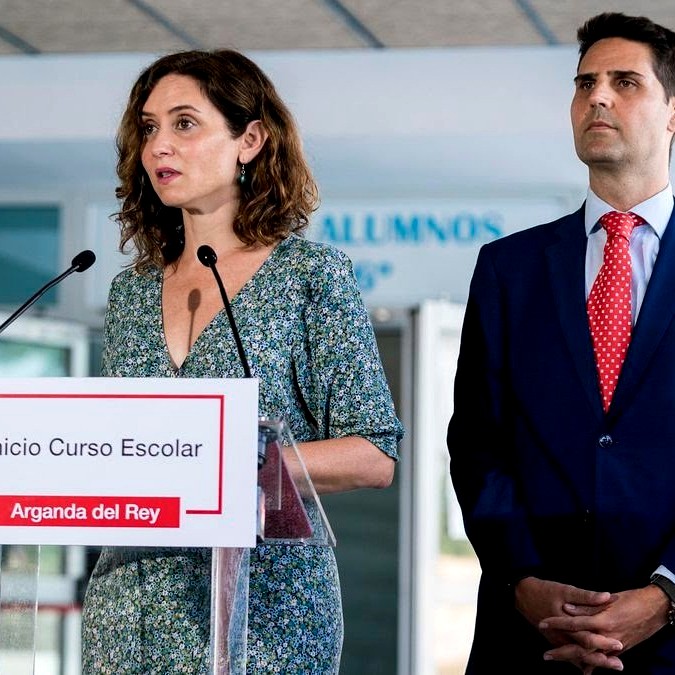
The recent decision by the Ayuso government in the Community of Madrid to ban symbols and activities supporting Palestine in educational institutions has sparked significant debate. This move, which includes the removal of Palestinian flags and scarves from schools, has been framed by officials as a necessary step to maintain neutrality in educational settings. However, critics argue that it infringes on fundamental rights such as freedom of expression and academic autonomy.
The Context of the Ban
In a directive communicated to various schools, the educational inspection under the leadership of Isabel Díaz Ayuso ordered the cancellation of activities organized in solidarity with Gaza, where over 64,000 individuals have reportedly lost their lives due to ongoing conflicts, a substantial portion of whom are minors. The spokesperson for the advocacy group Marea Palestina, Carlos Díez, confirmed that the Ministry of Education has been actively monitoring schools to enforce this ban.
Implications for Academic Freedom
This directive raises serious questions regarding academic freedom and the rights of educators to express their views. According to Díez, the actions taken by the Ayuso government could lead to legal challenges, as they may violate principles of autonomy and the freedom of expression that are foundational to educational institutions. “We will consider actions, including legal ones, against this violation of the rights to autonomy, academic freedom, and even fundamental rights such as freedom of expression of teachers,” he stated in a conversation with elDiario.es.
Historical and Political Context
The ban on Palestinian symbols in schools is not an isolated incident but part of a broader trend in Spain and Europe regarding the discourse surrounding the Israeli-Palestinian conflict. Historically, Spain has maintained a complex relationship with Palestine, often reflecting broader European sentiments. The recent escalation of violence in Gaza has reignited debates about solidarity movements and the role of educational institutions in advocating for human rights.
Comparative Analysis
- European Context: Similar bans have been observed in other European countries, where governments have restricted expressions of solidarity with Palestine under various pretexts.
- Impact on Students: The prohibition of such symbols may lead to a stifled environment for students who wish to engage in global issues, potentially limiting their understanding of international relations.
- Legal Precedents: Cases in other jurisdictions where academic freedom was challenged could provide a framework for legal action against the Ayuso government.
Future Perspectives
The implications of this ban extend beyond immediate educational environments. As the global community increasingly scrutinizes human rights issues, the actions of the Ayuso government may provoke further backlash not only from local advocacy groups but also from international organizations concerned about freedom of expression. The potential for legal challenges could also reshape the landscape of educational governance in Spain.
Conclusion
In conclusion, while the Ayuso government’s directive aims to maintain neutrality in schools, it raises significant concerns about the erosion of academic freedom and the right to free expression. As the situation evolves, stakeholders within and outside the educational sector will need to navigate the complex interplay of governance, rights, and global solidarity movements.